Malaysia's freshwater ecosystems are under siege. Decades of aquarium releases, aquaculture escapes, and irresponsible stocking have introduced predatory and competitive species that are reshaping our rivers, lakes, and reservoirs. For anglers, this isn't just an environmental issue — it directly affects the fish populations we depend on.
Here's a tactical briefing on the major invasive species in Malaysian waters, why they matter, and what you can do about it.
The 6 Most Damaging Invasive Fish in Malaysia
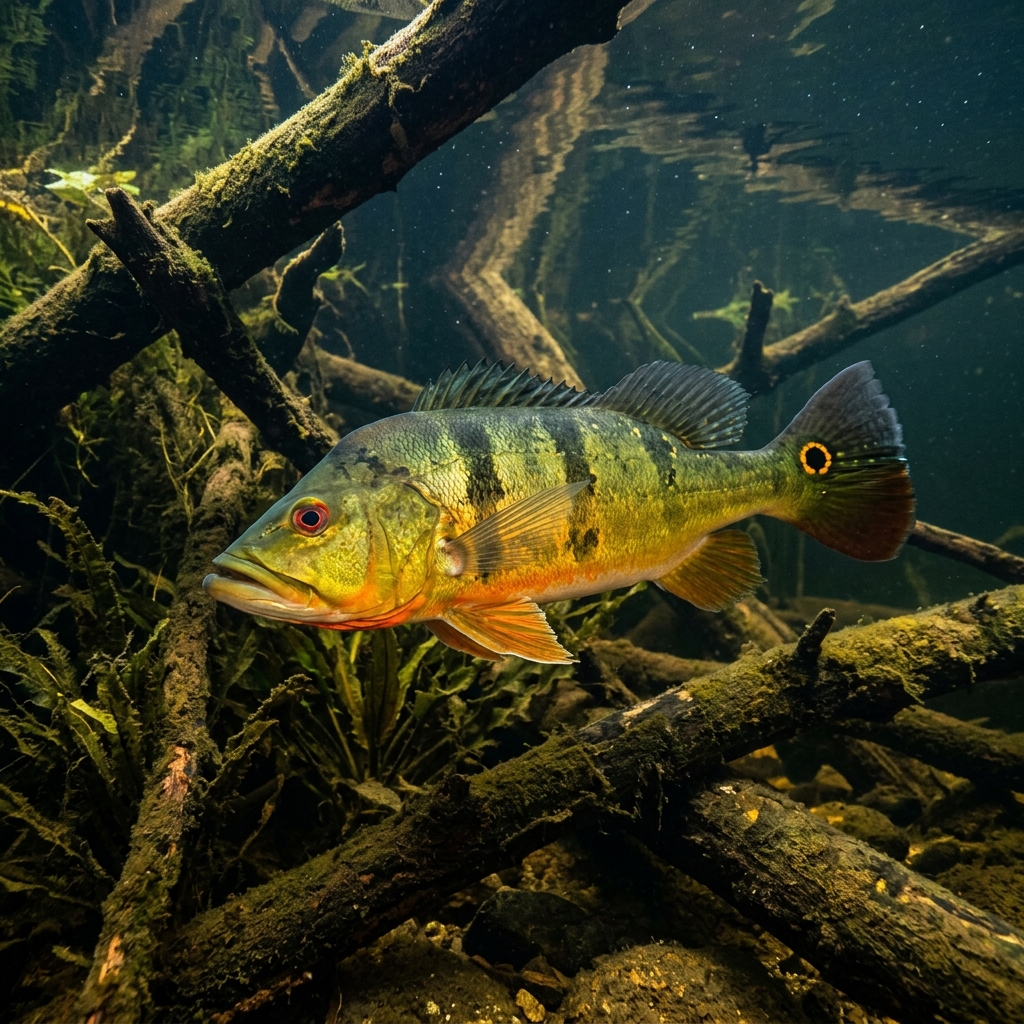
1. Peacock Bass (Cichla spp.) — Ikan Peacock Bass
Origin: Amazon River basin, South America
The peacock bass is arguably the most damaging invasive freshwater fish in Malaysia. Originally introduced through the aquarium trade and deliberate stocking for sport fishing, Cichla species are apex predators that decimate native fish populations in every waterway they colonize.
Why it's dangerous:
- Aggressive ambush predator with no natural predators in Malaysian waters
- Breeds prolifically in tropical conditions — multiple spawns per year
- Directly preys on juvenile native species including sebarau and kelah fry
- Established in reservoirs, mining ponds, and urban waterways across Selangor, Johor, and Perak
Current status: Widely established and expanding. Found in Putrajaya Lake, Subang, and numerous urban waterways. Eradication is considered virtually impossible in established populations.
Pro Tip: If you catch a peacock bass in a natural waterway, do NOT release it. Harvest it — the meat is firm and mild, excellent fried or steamed. Every peacock bass removed is one less predator attacking native fry.
2. Amazon Sailfin Catfish (Pterygoplichthys spp.) — Ikan Bandaraya
Origin: South America (Amazon basin)
Locally known as "ikan bandaraya" (city fish) due to its prevalence in urban waterways, the Amazon sailfin catfish is a heavily armoured bottom-dweller that was released from the aquarium trade. These algae-eaters can grow to over 50cm and have no commercial food value in Malaysia.
Why it's dangerous:
- Burrows into riverbanks to nest, causing erosion and destabilizing embankments
- Outcompetes native bottom feeders for food and habitat
- Armoured body makes it nearly predator-proof — nothing in Malaysian waters eats adult specimens
- Found in virtually every urban river and drain in Peninsular Malaysia
Current status: Ubiquitous in urban and suburban waterways. Some of the densest populations are in Klang Valley rivers, Sungai Melaka, and Johor waterways.
3. Red-Bellied Pacu (Piaractus brachypomus)
Origin: South America
Often mistaken for piranha due to its body shape, the red-bellied pacu is another aquarium release that has established breeding populations in Malaysian waterways. Growing up to 25kg in the wild, these fish are powerful omnivores.
Why it's dangerous:
- Large-bodied omnivore that outcompetes native species for food
- Consumes fruits, seeds, invertebrates, and smaller fish
- Disrupts food web dynamics in lakes and slow-moving rivers
- Breeding populations confirmed in multiple states
4. Tilapia (Oreochromis spp.) — Ikan Tilapia
Origin: Africa
Tilapia is perhaps the most controversial species on this list because it was intentionally introduced for aquaculture. While it's a vital food fish that supports livelihoods, its escape into natural waterways has had severe ecological consequences.
Why it's dangerous:
- Extremely aggressive breeders — prolific mouth-brooders with high survival rates
- Dominates shallow habitats, displacing native species from feeding and breeding grounds
- Directly linked to the decline of kelah (Malaysian mahseer) in rivers where both species occur
- Tolerates wide range of water conditions — almost impossible to control once established
Current status: Found in virtually every freshwater system in Malaysia. Wild tilapia populations are now permanent fixtures in rivers, lakes, and reservoirs nationwide.
Pro Tip: The link between tilapia proliferation and kelah decline is well-documented by Malaysian fisheries researchers. When tilapia dominate a river system, native species get squeezed out of their ecological niche.
5. Flowerhorn Cichlid — Ikan Flowerhorn
Origin: Man-made hybrid (originated in Malaysian aquarium trade, 1990s)
The flowerhorn is a uniquely Malaysian problem — this hybrid cichlid was literally created by Malaysian and Taiwanese aquarists in the late 1990s by crossing Central American cichlid species. When the flowerhorn craze died down, thousands were released into local waterways.
Why it's dangerous:
- Highly territorial and aggressive — attacks native fish and defends large territories
- Hardy and adaptable to Malaysian water conditions
- Breeds with other cichlid species, creating hybrid populations
- Established in drains, rivers, and reservoirs across multiple states
6. African Catfish (Clarias gariepinus) — Ikan Keli Afrika
Origin: Africa
Introduced for farming due to its fast growth rate, the African catfish has escaped into natural waterways and become a significant predator. It's larger and more aggressive than the native Clarias batrachus (ikan keli kayu).
Why it's dangerous:
- Grows larger and faster than native catfish species
- Voracious nocturnal predator — feeds on fish, frogs, insects, and even small birds
- Can breathe air and survive in low-oxygen conditions, allowing it to colonize degraded waterways where native species can't survive
- Hybridizes with native keli species, threatening genetic integrity
Impact Summary Table
| Species | Origin | Threat Level | Eradication Possible? | Established Where |
|---|---|---|---|---|
| Peacock Bass | Amazon | 🔴 Critical | No (in established areas) | Selangor, Johor, Perak |
| Sailfin Catfish | Amazon | 🔴 Critical | No | All states (urban) |
| Red-Bellied Pacu | South America | 🟠 High | Possible in isolated waters | Multiple states |
| Tilapia | Africa | 🟠 High | No | Nationwide |
| Flowerhorn | Hybrid (Malaysia) | 🟡 Moderate | Possible in isolated waters | Multiple states |
| African Catfish | Africa | 🟡 Moderate | No | Multiple states |
Government Response
Malaysia's Department of Fisheries (Jabatan Perikanan) has taken several measures to combat the invasive species crisis:
Skuad Pemburu Ikan Asing (Alien Fish Hunter Squad)
The government has deployed dedicated teams — the Skuad Pemburu Ikan Asing — to conduct removal operations in critical waterways. These teams use nets, electrofishing, and trapping to remove invasive species from rivers and lakes where native populations are under the most pressure.
Fisheries Act 1985
Under the Fisheries Act 1985, it is an offence to release non-native species into Malaysian waterways without permission from the Director General of Fisheries. Penalties include fines and imprisonment. Despite this, enforcement remains challenging given the scale of the problem.
Research & Monitoring
Malaysian universities (UPM, USM, UMT) are conducting ongoing research into the population dynamics of invasive species and their impact on native ecosystems. This research informs government policy on stocking, removal, and habitat restoration.
What Anglers Can Do
As anglers, we're on the water more than anyone. We see the changes first. Here's how you can be part of the solution:
1. Harvest Invasive Species
If you catch a peacock bass, tilapia, flowerhorn, or African catfish in a natural waterway — keep it. Don't practice catch-and-release with invasives. They're excellent eating, and every individual removed helps native populations.
2. Never Release Aquarium Fish
This is the root cause of Malaysia's invasive species crisis. Never release unwanted aquarium fish into drains, rivers, or lakes. If you can't keep a fish, return it to the pet store or find another aquarist to adopt it.
3. Report Unusual Sightings
If you catch or observe an unfamiliar species in a waterway, report it to your state's Jabatan Perikanan office. Early detection of new invasions is critical for containment.
4. Support Native Species Conservation
Choose to fish at destinations that prioritize native species conservation. Spots like Taman Negara (catch-and-release kelah) and Royal Belum represent what Malaysian freshwater fishing should look like — pristine ecosystems where native species thrive.
5. Clean Your Gear
When moving between waterways, clean and dry your tackle, nets, and boats. Invasive species eggs and juveniles can hitchhike on wet gear.
Pro Tip: Join local conservation efforts. Facebook groups like "Joran Malaysia" and "Malaysia Sport Fishing" regularly organize invasive species removal events. It's good for the ecosystem, and you get to fish.
The Bottom Line
Malaysia's invasive species problem didn't happen overnight, and it won't be solved overnight. But every angler who harvests an invasive fish, who refuses to release aquarium pets into waterways, and who supports native species conservation is part of the solution.
Know what you're catching. Know what belongs. Fish responsibly.